








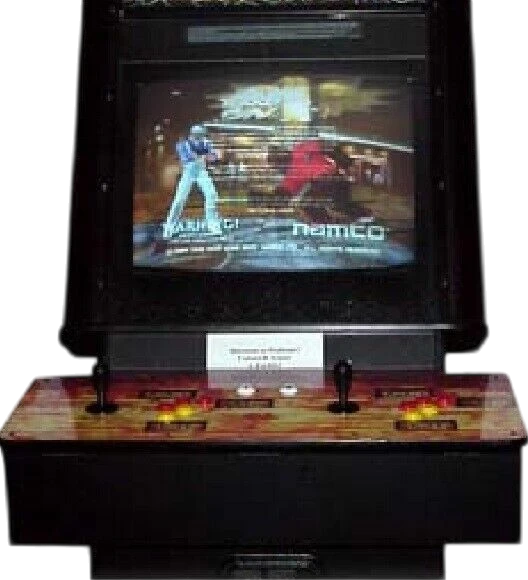
The Namco Tekken Arcade Cabinet was a fighting game arcade machine that was manufactured by Namco and came into existence in 1997.
Background
Namco’s Tekken series came into being in the mid-1990s as a revolutionary 3D fighting game franchise that would ultimately transform arcade gaming experiences. The Tekken 3 arcade cabinet represented a considerable technological advancement for the company, making use of the state-of-the-art Namco System 12 hardware platform, which provided exceptional graphical and processing capabilities for its period.
The arcade machine was equipped with a complex technical configuration, including a R3000A 32-bit RISC processor operating at a speed of 48MHz and delivering an operational performance of 30 MIPS with a data bus speed of 132 MB/sec. This powerful hardware enabled the execution of intricate character animations and facilitated smoother gameplay when compared to earlier iterations within the fighting game genre.
Features


Key technical specifications of the Tekken Arcade Cabinet encompassed:
• 32-bit RISC processor
• 48MHz clock speed
• 30 MIPS performance rating
• Advanced motion capture technology
• 3D background environments
• Two-player competitive gameplay
The cabinet employed cutting-edge motion capture techniques in order to create realistic character movements, collaborating with martial arts specialists to authentically capture genuine fighting styles. Characters such as Eddy Gordo’s Capoeira and Hwoarang’s Taekwondo were painstakingly recorded using specialized motion capture facilities, resulting in highly detailed animations.
Popularity and Legacy
Tekken 3 rapidly became a fundamental component in arcades all around the world, drawing in players with its varied roster of 19 fighters and complex storylines. The game introduced a number of new characters who would ultimately become mainstay figures in the franchise, including Jin Kazama, Ling Xiaoyu, and Eddy Gordo.
The success of the arcade cabinet was not confined solely to arcade environments; it was subsequently ported to the PlayStation, where it achieved the status of one of the best-selling games on the platform. Its widespread popularity contributed to solidifying Tekken’s reputation as a premier fighting game franchise, influencing the design of future games as well as the competitive gaming scenes that developed thereafter.

Video Reviews and Commercials
The speaker discusses a Tekken arcade machine he restored. While not perfect, the cabinet is structurally sound with new joysticks, buttons, marquee lights, and coin door. It’s a Data East cabinet, possibly for Desert Assault, with minor cosmetic imperfections like water damage and a busted corner.
Availability and Collectability
Original Tekken 3 arcade cabinets have become highly sought-after collector’s items among vintage arcade enthusiasts. While they are not exceedingly rare, well-preserved machines can command significant prices within the collector’s market, particularly those that boast original Japanese specifications.
Collectors and arcade restoration hobbyists frequently seek out these cabinets due to their historical importance in the realm of gaming history. The machines signify a crucial moment in the development of arcade games, showcasing the technological capabilities of late 1990s gaming hardware as well as Namco’s innovative design philosophy.
Arcade preservation groups and retro gaming museums regularly showcase Tekken 3 cabinets, providing opportunities for new generations to engage with the game that played a significant role in defining an era of competitive fighting games. The cabinet’s design, characterized by its distinctive control panel and sturdy construction, remains a testament to the craftsmanship involved in late 20th-century arcade machine manufacturing.