









Background
The Nintendo Power Glove came into existence as a virtual reality glove controller specifically designed for the NES, which was manufactured by the renowned company Nintendo and officially released in the year 1989. This innovative product was developed by VPL Research and Abrams—both entities are well-known for their significant contributions to the early development of virtual reality technology—before being licensed to Mattel for distribution within the United States, as well as for the PAX event in Japan. The original concept of the Power Glove originated from high-end motion capture systems that were utilized within the aerospace and medical fields, which were typically priced at over $20,000. However, Mattel had the ambitious goal of adapting this advanced technology into a consumer-friendly product that would be priced under $100, a challenging task that necessitated considerable compromises in terms of both hardware and functionality. Initial marketing efforts positioned the Power Glove as a futuristic and innovative way to engage with video games, with commercials vividly showcasing children mimicking punches in the air to control on-screen fighters, although the actual performance of the glove rarely aligned with these lofty and aspirational demonstrations.
Having been released during the pinnacle of Nintendo’s dominance in the late 1980s, the Power Glove arrived amid a surge of excitement for accessories that promised an even deeper level of immersion, akin to the NES Zapper light gun. Mattel’s aggressive and well-crafted advertising campaign—including a memorable cameo appearance in the 1989 film The Wizard—greatly fueled early demand, with estimates for holiday sales reaching an impressive 100,000 units within its first year. However, the rushed development timeline—spanning merely nine months from the initial prototype to its arrival on store shelves—resulted in the glove’s motion-tracking capabilities being inadequately developed, as it relied on ultrasonic sensors that struggled to accurately translate hand movements. By the year 1990, the Power Glove had largely vanished from the shelves of most retailers, overshadowed by more reliable and effective controllers, as well as a growing library of games that seemingly ignored its very existence.
Features
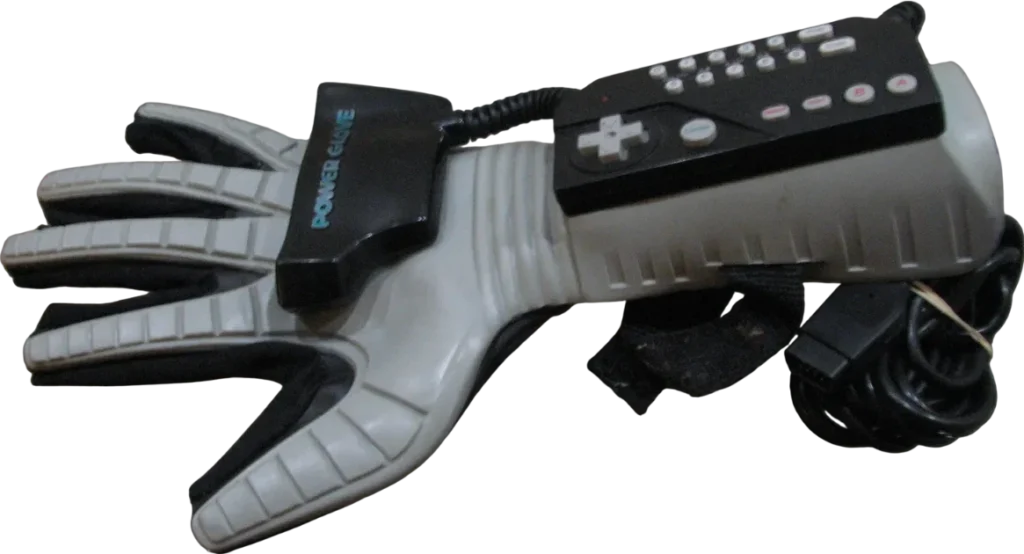
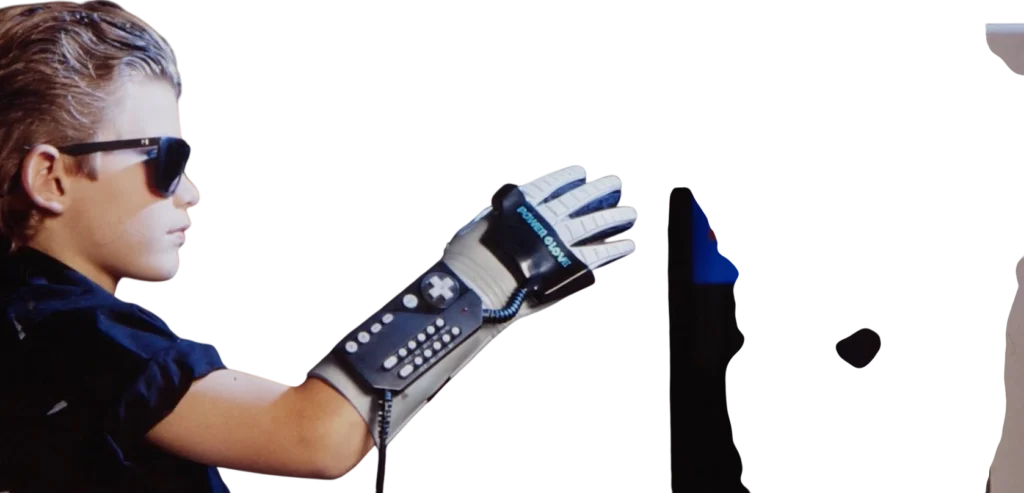
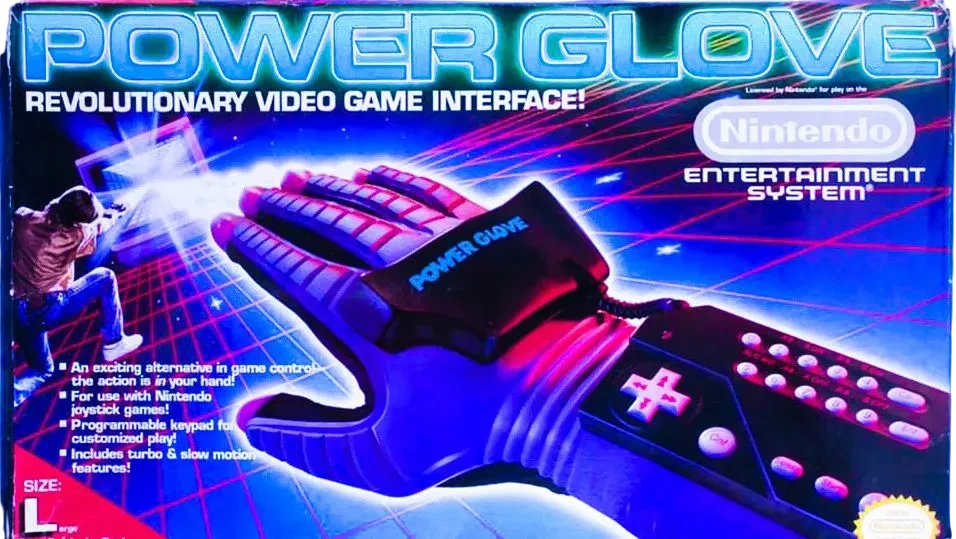
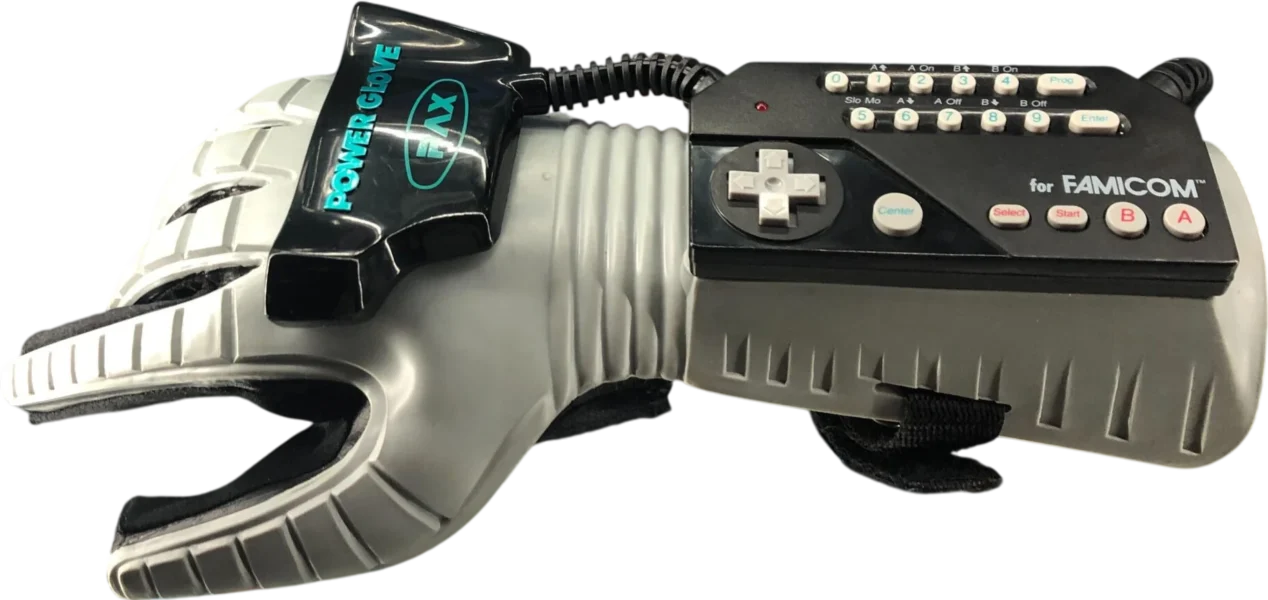
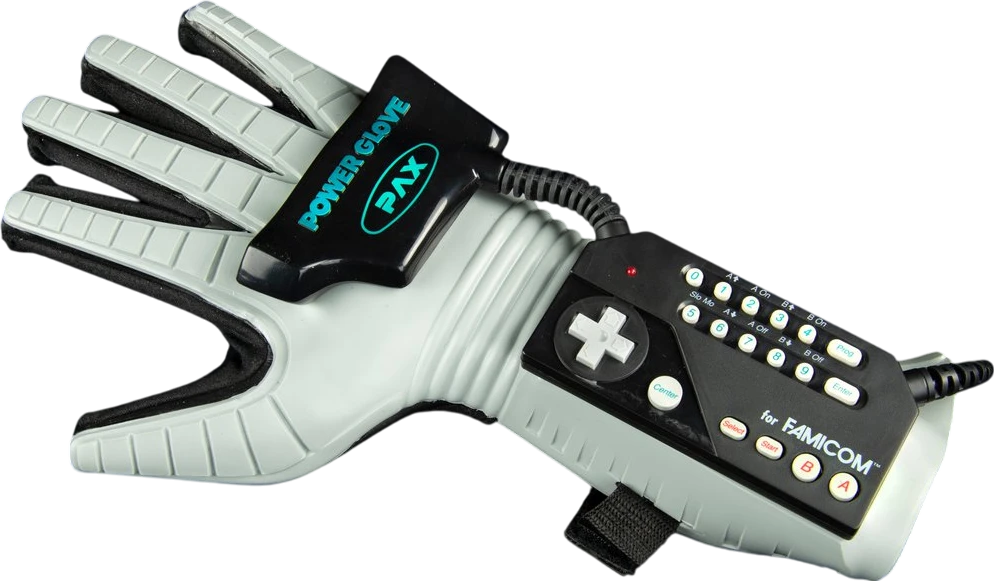
The Power Glove had an appearance that resembled a bulky black forearm sleeve adorned with neon accents, specifically designed to fit the majority of right hands. This unusual controller included a directional pad, action buttons that were labeled A and B, and a numeric keypad featuring buttons numbered from 0 through 9. The keypad allowed players to input cheat codes or adjust sensitivity settings, a feature that often left users feeling confused and frustrated, as they expected a simple plug-and-play experience. Motion detection was managed by ultrasonic transmitters that were mounted on the glove’s wrist, along with receivers that were strategically placed near the television, creating a setup that was prone to interference caused by ambient noise or the layout of the room, thereby requiring frequent recalibration during gameplay.
Compatibility also presented another significant hurdle, as only two games—namely Super Glove Ball and Bad Street Brawler—were specifically designed to be used with the glove. Other titles required players to manually configure the button mappings and adjust sensitivity settings, adding to the complexity of the experience. Technically, players could use the glove as a standard controller by resting their arm and pressing buttons, but this approach defeated the very purpose of its intended motion controls, which often registered false inputs or lagged behind the actual gestures made by the player. The glove’s weight—exceeding one pound—also contributed to fatigue during extended play sessions, a problem that was further exacerbated by the need to hold exaggerated poses in order to trigger even the most basic commands.
Popularity and Legacy
Despite its numerous technical shortcomings, the Power Glove became a significant cultural artifact, symbolizing both the boldness and overreach of 1980s technology culture. Its appearance in The Wizard, where a character enthusiastically boasts, “I love the Power Glove—it’s so bad,” transformed it into a meme long before the concept of internet memes was even established. In retrospect, it is viewed as a precursor to modern motion-control systems, such as the Wii Remote and virtual reality hand-tracking technologies, although the extent of its direct influence on those advancements remains a subject of debate—more so serving as a cautionary tale regarding the pitfalls of overpromising than as a definitive blueprint for future innovations.
During the 2000s, the glove experienced an unexpected resurgence in popularity among hobbyists and modders, who creatively repurposed its sensors for various DIY projects, ranging from robotics to music interfaces. Artists and bands, including the electronic duo Power Glove—who derived their name from the accessory—incorporated its distinctive aesthetic into their album art and stage costumes, solidifying its status as a retro-futuristic icon. Meanwhile, numerous documentaries and YouTube retrospectives have meticulously dissected its troubled development, framing it as a compelling case study in the challenges associated with bringing cutting-edge technology to mainstream audiences.
Video Reviews and Commercials
The video shows a collector discussing the Nintendo Entertainment System’s Power Glove, a gaming accessory from the late 1980s. He recalls it being difficult to use as a child and remembers its appearance in the movie “The Wizard”. The collector demonstrates a new, unopened Power Glove and its instruction manual, noting he prefers traditional game controllers.
Availability and Collectability
Originally retailing for $75—an amount that is roughly equivalent to approximately $184 in today’s currency—the Power Glove is now a common sight on eBay and at retro gaming conventions, with prices varying widely from $150 to $300 depending on the condition and packaging of the unit. Unlike rare NES cartridges or prototypes, the Power Glove is not considered scarce, but mint-in-box versions command higher premiums from collectors who are drawn to its distinctive and unique design. Occasionally, modified units that feature Bluetooth adapters or Arduino integrations surface online, appealing more to tinkerers than to traditional gamers.
The glove’s collectability is derived less from its functionality and more from a sense of nostalgia, serving as a tangible reminder of an era when virtual reality seemed perpetually “five years away.” Conventions such as PAX and Comic-Con frequently feature displays of Power Gloves alongside other nostalgic relics from the 1980s, while fan-made replicas continue to appear in independent films and music videos. For those who are curious about experiencing it firsthand, emulators and fan patches exist for popular games, although most individuals agree that the novelty wears thin rather quickly—a testament to just how far motion controls have evolved since the groundbreaking year of 1989.