










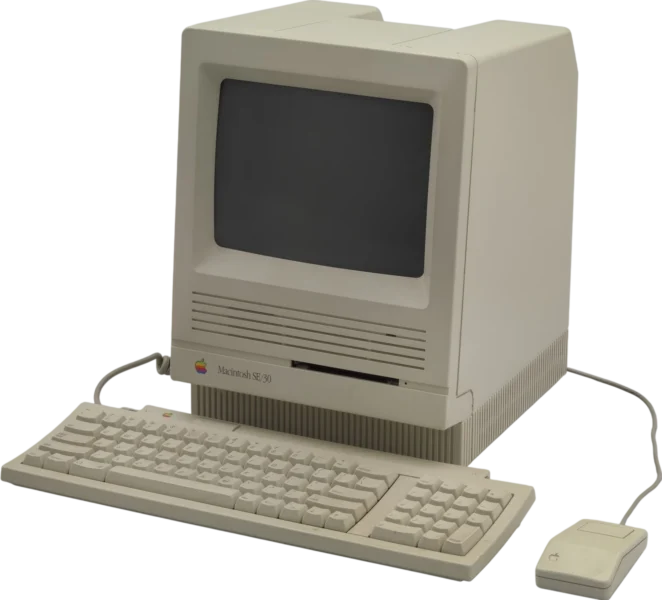
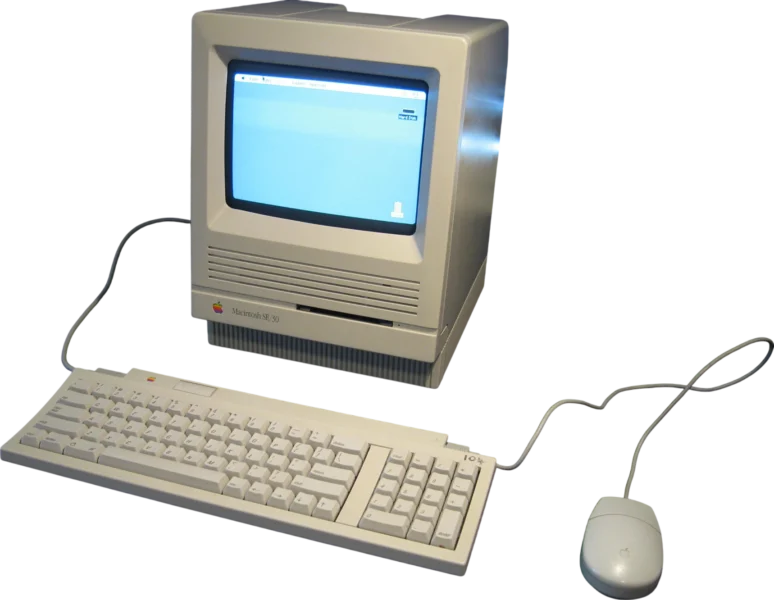
The Apple Macintosh SE/30 was a compact personal computer that was manufactured by the well-known technology company Apple and subsequently released to the public in the year 1989.
Background
The Macintosh SE/30 came into existence during a crucial and transformative period in Apple’s computing history, signifying a significant evolution when compared to its predecessor, the Macintosh SE. This computer was designed as a compact all-in-one system, and the machine effectively packed considerable technological potential into its relatively small beige case, which measured 13.6 inches in height and weighed approximately 19.5 pounds.
Developed at a time when the realm of personal computing was rapidly transforming and evolving, the SE/30 bridged the gap between earlier, limited machines and more powerful professional systems that catered to advanced users. Its architecture drew considerable inspiration from the Macintosh II series, particularly the IIx model, but condensed those impressive capabilities into a more compact form factor that appealed to both home users and professional users alike.
Features
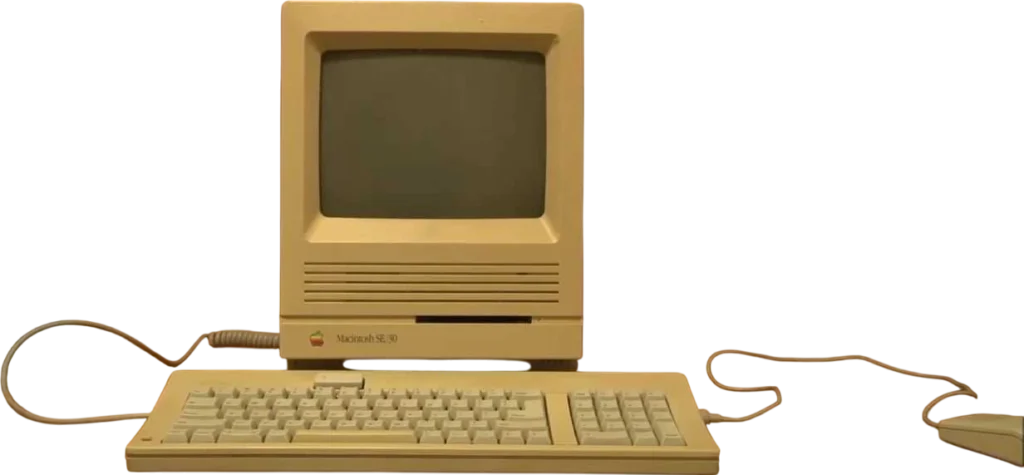
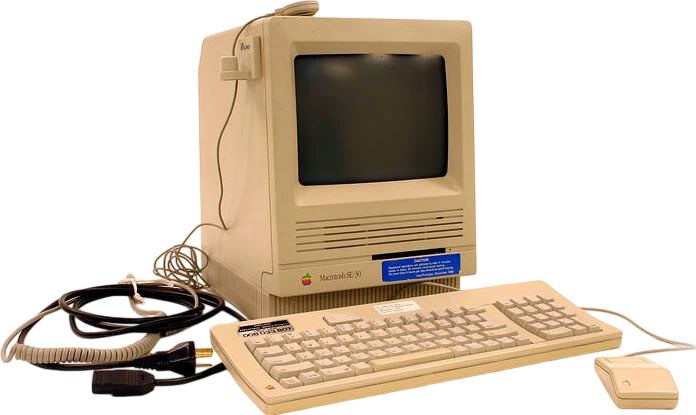
The SE/30 boasted several notable technical specifications that distinctly set it apart from earlier models. Its central processing unit was a Motorola 68030 that was running at a speed of 15.667 MHz, paired with a Motorola 68882 floating-point unit that enhanced its computational abilities. The computer shipped with 1 MB of RAM, which could be expanded up to a noteworthy 32 MB – a substantial amount for its era and context.
Key hardware features that were included in this model were:
– A 9-inch monochrome display that came with a resolution of 512 x 342 pixels, allowing for clear visuals
– A Single Processor Direct Slot (PDS) that facilitated the addition of third-party upgrades
– A 1.44 MB high-density floppy disk drive that provided substantial storage capabilities
– An optional 40 or 80 MB hard drive that expanded storage further
– A 32-bit clean ROM (with potential upgrades for enhanced performance)
The machine’s expansion capabilities were particularly impressive and noteworthy, allowing users to add network cards, accelerators, and display adapters through its dedicated expansion slot, which provided considerable versatility.
Popularity and Legacy
The Macintosh SE/30 quickly gained significant traction among professionals and enthusiasts alike. Its performance was notably superior to that of earlier compact Macs, making it a favorite choice for desktop publishing, graphic design, and small business computing. The machine was powerful enough to produce professional publications; for instance, it was utilized to create the UK’s first color tabloid newspaper using advanced digital pre-press technology.
Interestingly, the SE/30 could be upgraded from a standard SE model through a logic board replacement, which came with a cost of $1,699 – a significant financial investment at the time. This upgrade path effectively demonstrated Apple’s unwavering commitment to providing paths for users to enhance and improve their existing hardware.
Availability and Collectability
Produced from January 1989 until October 1991, the SE/30 had a relatively short production run, which contributed to its uniqueness. Its initial price of $4,369 (which is equivalent to around $11,080 when adjusted for inflation in 2024) made it a premium product that was not accessible to everyone. Today, the machine has become a highly sought-after item among vintage computer collectors, with well-maintained units commanding significant prices in the collector’s market.
Some enthusiastic collectors have extensively modified SE/30 units, adding accelerator cards, increasing RAM, and even installing modern storage solutions to enhance performance. These modifications have effectively extended the machine’s usability far beyond its original design parameters, thereby transforming it from a historical artifact into a functional vintage computing platform that continues to attract interest.
The SE/30 represents a significant moment in Apple’s design philosophy – a compact, powerful machine that vividly demonstrated the potential of personal computing during the late 1980s. Its influence can be seen in the subsequent compact Mac designs and reflects Apple’s ongoing commitment to creating integrated, user-friendly computing systems that cater to a wide audience.