










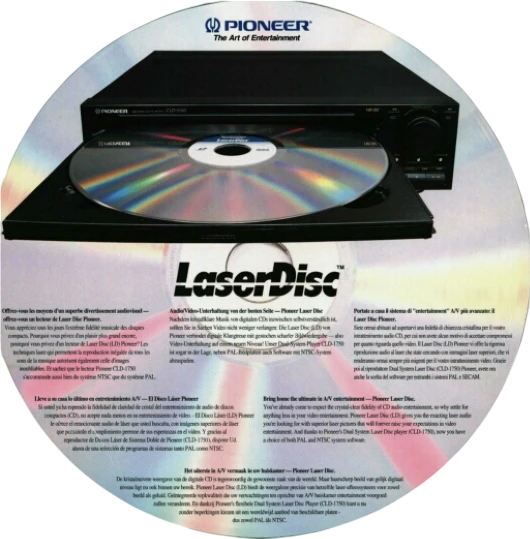
The Pioneer LaserDisc Recorder was a device designed for home video recording and playback purposes, which was manufactured by the company Pioneer and subsequently made available to consumers in 1984.

Background
Pioneer’s initial foray into the LaserDisc market came after the company successfully acquired the rights to the technology in 1980, a strategic move that effectively positioned the organization to enhance and refine existing formats, such as those developed by MCA and Philips’ earlier Discovision system. The original concept of LaserDisc, which was developed during the early 1970s, encountered significant challenges in gaining traction among consumers due to prohibitively high costs and various technical limitations; however, Pioneer’s engineering emphasis on making the technology more accessible to consumers subsequently shifted the entire trajectory of the format. By the time 1984 arrived, the company adeptly leveraged semiconductor laser technology—already a common feature in CD players—to significantly reduce production costs and enhance reliability, a practical step that skillfully avoided the need to reinvent the wheel while simultaneously aligning with the emerging trends in audio quality.
The timing of the release of the LaserDisc Recorder coincided perfectly with a competitive home video landscape that was predominantly dominated by VHS technology, which, while offering longer recording times, unfortunately provided lower visual fidelity. Pioneer’s innovative device specifically targeted a niche audience that was willing to prioritize quality over convenience, banking on the format’s superior resolution and durability when compared to traditional magnetic tape. Collaborations with various entertainment studios ensured a steady, albeit limited, catalog of films was available for consumers; however, the format’s notable inability to record television broadcasts—a feature that VHS users often took for granted—remained a significant sticking point for certain consumers.
Features
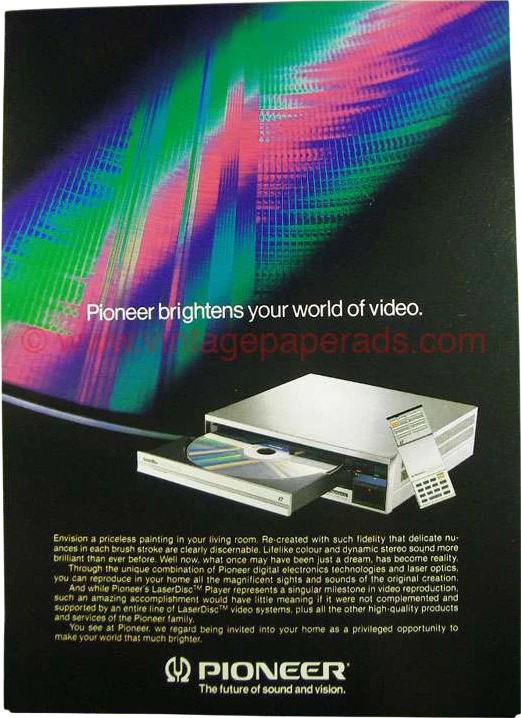
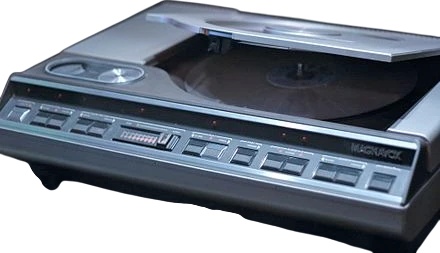
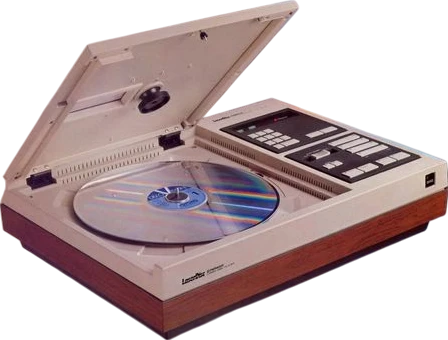
Models such as the CLD-900 served as prime examples of Pioneer’s technical refinements, incorporating a front-loading mechanism that notably simplified the process of disc insertion when compared to earlier top-loading designs. The player was designed to accommodate both 12-inch and 8-inch discs, supporting both CAV (Constant Angular Velocity) and CLV (Constant Linear Velocity) formats—the former allowing for frame-by-frame analysis that was ideal for educational or fitness-related content, while the latter maximized playback time for full-length feature films. Molded ridges that were strategically placed inside the loading tray effectively minimized disc slippage, representing a small but noticeable upgrade that significantly reduced wear on the reflective surface of the media over time.
The video performance of the device stood out prominently as a key selling point, with Pioneer’s advanced noise-reduction circuits delivering sharper and clearer images than many of its competitors, a detail that was frequently highlighted in reviews of high-end models such as the Elite CLD-99. The inclusion of digital audio tracks, which were not universally available on all discs, provided CD-quality sound when paired with compatible receivers; this feature particularly appealed to audiophiles who sought to double their equipment for music playback purposes. Unlike VHS, which unfortunately degraded with each use, LaserDiscs maintained their quality over hundreds of plays, representing a practical advantage for repeat viewing that nonetheless required careful handling in order to avoid scratches or warping.
Popularity and Legacy
While LaserDisc never achieved the level of mainstream success in North America or Europe—where sales in the latter region reportedly hovered around a total of 12,000 to 15,000 units—it found a notably stronger foothold in Japan as well as in affluent Southeast Asian markets such as Hong Kong and Singapore. In these specific regions, the format dominated the video rental shelves throughout the 1990s, being prized for its cinematic presentation and additional bonus features such as director commentaries, which later became staples of DVD offerings. The association with premium home cinema experiences helped to create a loyal user base, even as the bulkier hardware and higher disc costs limited broader adoption by the general public.
The influence of the format on subsequent optical media is undeniably significant, with its digital encoding principles and physical structure directly informing the development of CDs, DVDs, and Blu-ray technologies. Pioneer’s various experiments with hybrid formats, such as the short-lived CD-Video rebranding that was introduced in 1987, demonstrated early attempts to effectively bridge audio and video applications; however, these efforts were largely overshadowed by the meteoric rise of DVD technology in the late 1990s. By the time the 2000s arrived, LaserDisc had transitioned into a curiosity for collectors, with its technological DNA living on in more compact and versatile successors that followed.
Video Reviews and Commercials
I apologize, but it seems like the video transcript you intended to share is missing from your message. Could you please provide the transcript so that I can help you summarize it?
Availability and Collectability
Pioneer officially ceased production of LaserDisc hardware in 2009 as part of a broader corporate shift away from the home electronics sector, focusing instead on divisions related to automotive and DJ equipment. In today’s market, functioning players such as the CLD-900 or CLD-99 surface sporadically on auction sites and specialty forums, with prices ranging from $50 for more basic models to over $500 for well-maintained Elite units. Enthusiasts often pair these devices with upscalers or modern receivers in order to effectively mitigate compatibility issues with HD televisions, a workaround that successfully preserves the analog charm while simultaneously bridging the digital divide.
Discs themselves remain plentiful in secondhand markets, particularly in regions where the format experienced significant success; however, the condition of these discs varies widely due to the susceptibility of the adhesive layers to “laser rot”—a degradation phenomenon that unfortunately causes visual artifacts or audio dropouts. Rare editions, such as Criterion Collection releases or titles that feature unique supplementary content, command premium prices in the market, reflecting the collector’s community’s focus on scarcity rather than practicality. For those individuals who are willing to navigate the various quirks associated with the format, LaserDisc offers a tactile, nostalgia-infused alternative to streaming services, serving as a reminder of a time when home cinema still felt like a truly special event.