







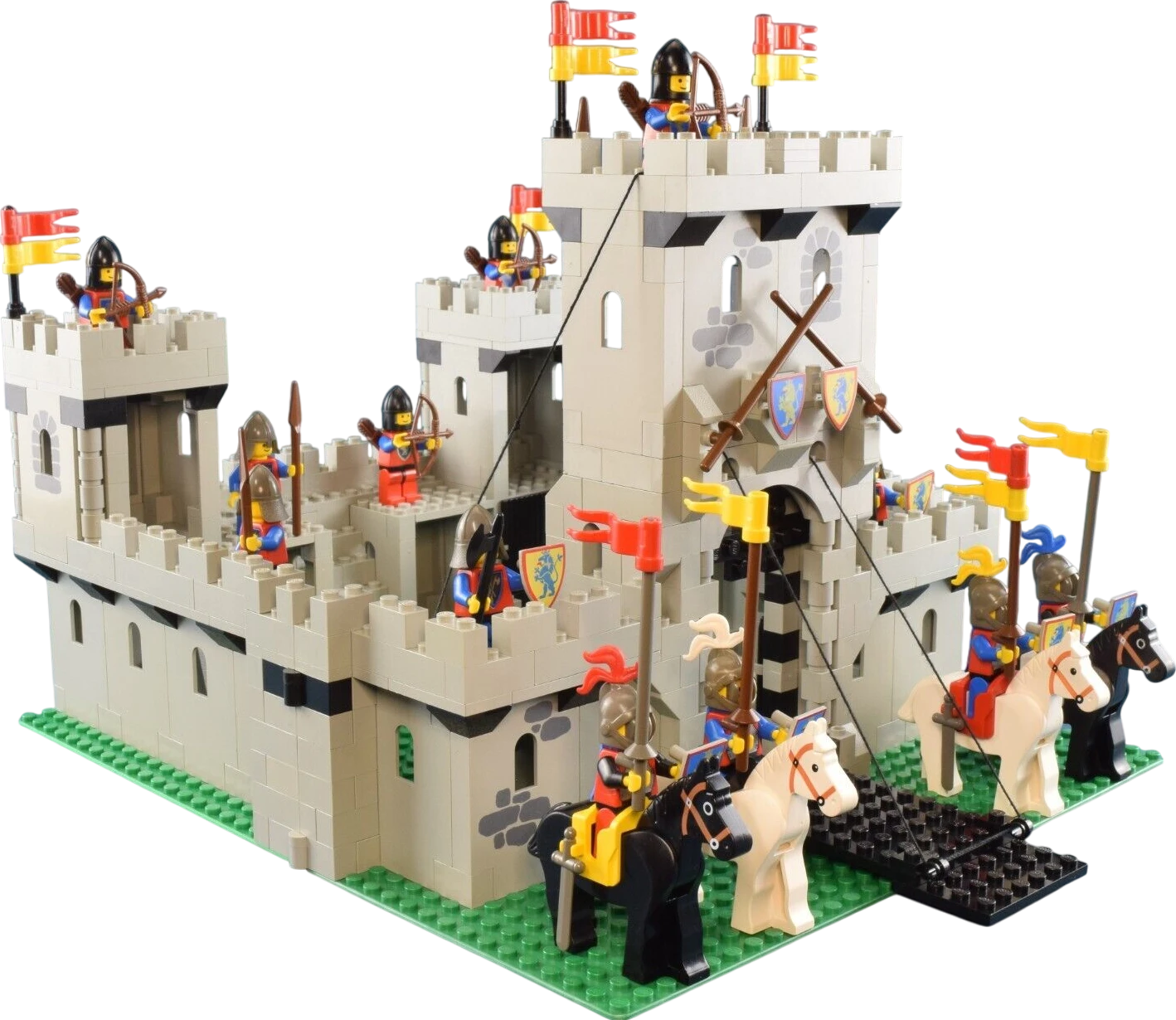
The LEGO Castle Set was a building blocks toy consisting of a grey castle, knights, and accessories manufactured by LEGO in Denmark and released in 1984.
Background
By the late 1970s, LEGO had carved a niche with its creative building sets—but 1978 marked a turning point for the company with the introduction of specialized themes, LEGO took a step beyond the conventional sets. Castle, Space, and Town were the first thematic categories, with Castle embracing medieval mythology. Recognizable by its prominent yellow pieces, the original castle set, officially numbered 375, stood out in its day. The yellow hue was assumed to mimic the plaster found on some historic castles, though it was a far cry from the gray tones associated with medieval fortresses. Unlike many toys of its time, the LEGO Castle was designed to be openable—a feature that fostered imaginative play and storytelling.
The concept drew from the emerging idea in 1978 to provide children with themed play worlds—and the introduction of distinctive knights and detailed accessories marked a new direction for LEGO. The brand was on the threshold of synchronizing its products with narratives, as seen in early knight figurines with movable visors and armor plaques. By 1981, the theme had reached North America—gaining momentum alongside other emerging themes like Space.
Features
- A Modular Structure: The castle’s hinged walls allowed it to open fully, revealing interior details like a prison cell, armory, and throne room. This modularity encouraged dynamic storytelling and interactive play^3.
- 12 Minifigures: Four mounted knights, four archers, two axemen, and two spearmen populated the set, each adorned with the Lion Knights’ crimson and gold livery. Notably, the knights featured exclusive breastplate designs and movable visors, a rarity at the time^1.
- New Parts and Accessories: The set introduced specialized elements, including one-piece horses, feather plumes, and bows with attachable arrows. These components became staples of subsequent Castle sets^2.
- Defensive Mechanisms: A brick-built portcullis and raised drawbridge added tactical depth, enabling children to simulate sieges or defend against invaders^3.

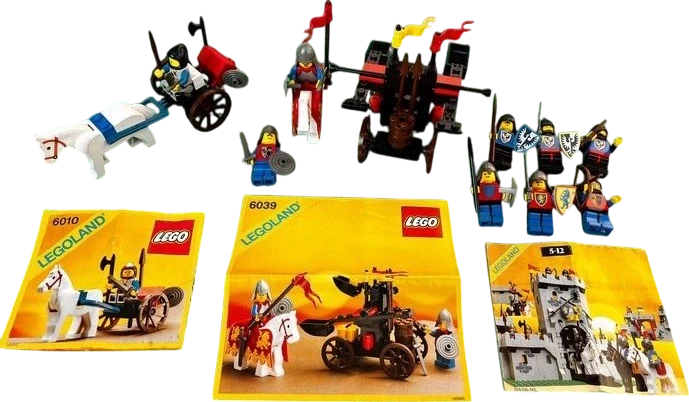
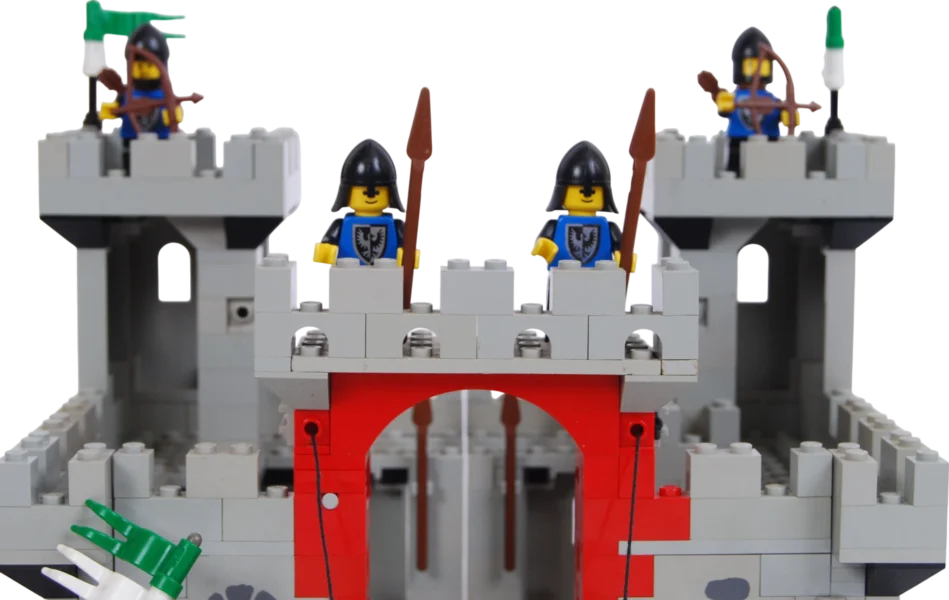
The LEGO Castle set boasted a plethora of features uncommon for its time, including the concept of modularity—the idea that sections could be rearranged or opened for enhanced play. The large castle came with brick-constructed horses, knights armed with swords and shields, and ornamental components that included sticker-based insignias. Of special note were the adjustable minifigure limbs, an innovation that gave the figures realistic movements. With the designers allowing for customization, kids could mix and match parts—effectively crafting their unique narratives.
As for the castle itself, the hinged design allowed sections to swing open, revealing an interior ripe for play and decoration—a feature that hearkened back to a time when detail was achieved by simple means. The introduction of specialized accessories like fletches, shields, and lattice lent a medieval flair previously unavailable in brick form. Some shields bore insignias offering hints at backstories of the warring factions within the set. This allowed for unrestricted gameplay, letting users allocate roles and antagonisms as they desired.
Popularity and Legacy
The reception of the LEGO Castle set was notable, finding a special place among young builders—it wasn’t merely a toy; it was a canvas for creativity. Kids could dream up battles or tranquil kingdoms, all within their construction capacities.
Despite its bright appearance, it set the prototype for future castle sets that drifted towards more ‘authentic’ monochromatic appearances. The success of the original castle set paved the way for expansions and sub-themes like the Forest men and Black Falcons. The inclusion of factions brought an extra layer of rivalry and fellowship to the sets, laying the foundation for contemporary “good vs evil” play contingencies—often seen today.
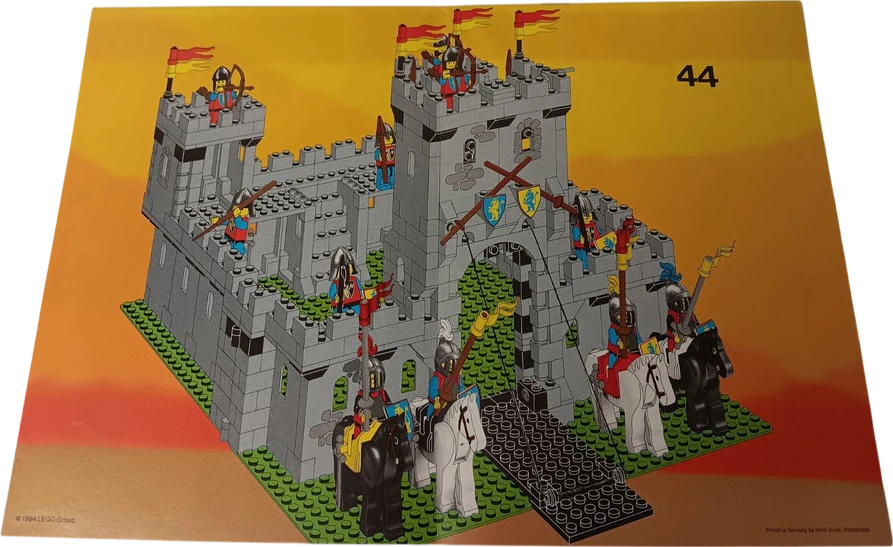
- Faction Rivalries: The Lion Knights’ conflict with the Black Falcons (featured in sets like 6074 Black Falcon’s Fortress) introduced faction-based play, a concept later expanded in themes like Knights’ Kingdom and Kingdoms.
- Modern Homages: LEGO’s 2022 Lion Knights’ Castle (set 10305) directly references the 6080 set, replicating its heraldic motifs and modular design while incorporating modern building technique.
- Cultural Impact: Fan communities, such as Classic-Castle.com, frequently rank the King’s Castle among the top LEGO sets of all time, citing its balance of aesthetics and playability.
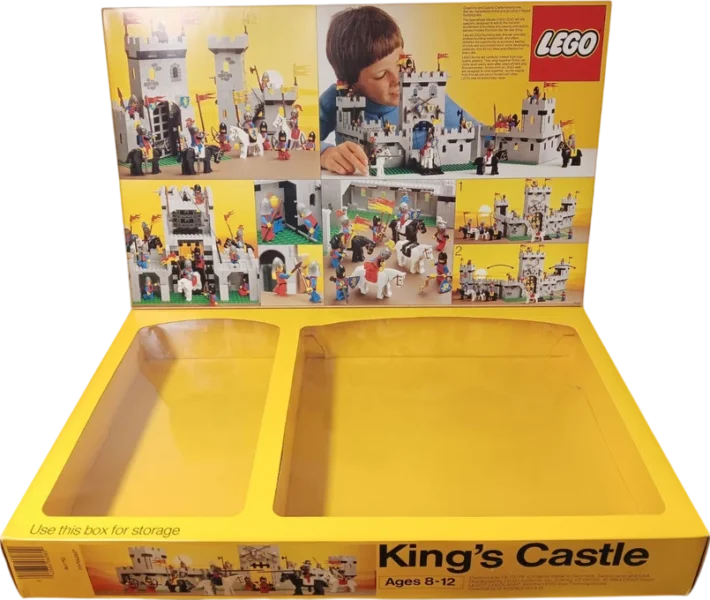
Throughout two decades, LEGO Castle remained relevant, effortlessly bridging the gap between simple pastimes and intricate model-building experiences seamlessly—its influence is noticeable even in modern sets that have moved notably away from bright colors to a more muted palette reflective of historical castles.
Advertisements / Commercials
Check out this vintage TV commercial for the LEGO Castle Set (1980) where children play with a detailed castle built from bricks. The Kings Castle includes knights, horses, and a drawbridge. Characters engage in battles, defend the castle, and rescue figures using a catapult. Other castle sets are briefly visible, suggesting more possibilities for creative play. The commercial mentions collecting other sets to expand adventures within the castle theme.
Availability and Collectability
In today’s market, the original LEGO Castle set holds a special allure for collectors—with an escalating interest in vintage LEGO products, this set has become increasingly in demand. While complete sets are rare, dedicated auction sites or LEGO-focused marts occasionally present opportunities for acquisition. However, obtaining a set in its entirety can be costly—as prices have been buoyed by nostalgia and rarity.
For newer collectors or builders wishing to recreate similar structures, LEGO continues to offer castle-themed sets,—albeit with modern improvements such as newly designed mini figures and advanced building techniques. Still, nothing quite equals the charm of the original set, with its iconic yellow bricks and simple yet attractive design. The old pieces, particularly those with stickers that have faded with time, provide a genuine glimpse into the past—a drawn-out memory of a benchmark in LEGO’s story.
As for enthusiasts and purists, online communities thrive with discussions, trade forums, and guides for identifying genuine pieces—the original set’s status is emblematic of LEGO’s resourcefulness and flexibility, standing as a testament to a brand that continues to evolve yet remain true to its core.