








Background
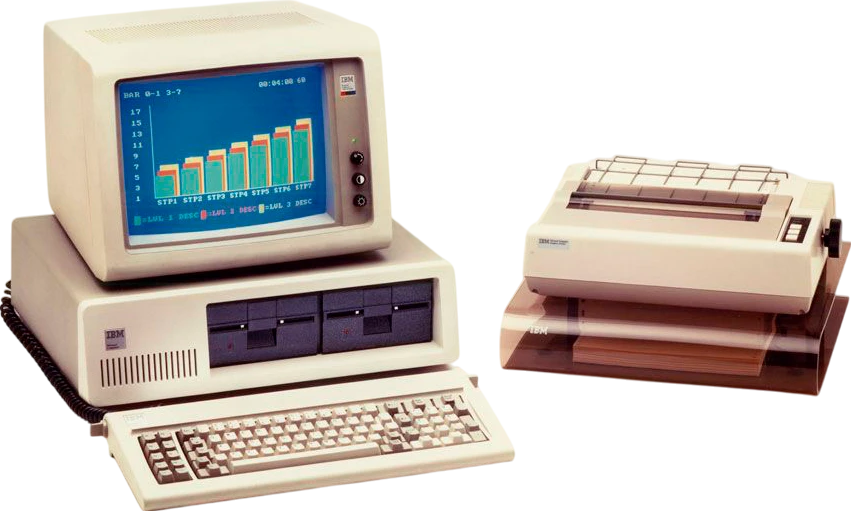
The IBM PC XT 5150 was a personal computing device that was manufactured and produced by the well-known company IBM, and it was officially released to the public in the year 1981, arriving rather late to a marketplace that was already quite crowded with numerous competitors including Apple, Commodore, and Atari. In contrast to IBM’s typical multi-year development cycles for their products, the 5150 was developed and brought into existence in a relatively short time frame of approximately 12 months by a small team that chose to bypass the usual corporate protocols that IBM adhered to, leaning heavily on third-party vendors for essential components that were critical to the machine’s functionality. The company Intel provided the 4.77 MHz 8088 processor, while the software giant Microsoft supplied the operating system known as PC-DOS, as well as the BASIC language interpreter, which was a strategic move that effectively shifted the responsibility for software development outside of IBM’s traditional vertical integration model.
The base model of the 5150 began at a price of $1,565, and this was without the inclusion of a monitor or floppy disk drives, targeting home users who might connect it to a television set or cassette player for their computing needs. Business configurations, on the other hand, soared to a price point of approximately $4,500, which included 64KB of RAM, dual floppy disk drives, a color monitor, and a printer—this amount is equivalent to roughly $14,000 in Swiss Francs as of the year 2023. While the price was higher compared to rival products such as the Atari 800 or Commodore VIC-20, the IBM brand name carried significant weight in corporate environments, where reliability and service contracts were valued more than the cutting-edge specifications that other models might have offered. The architecture of the system, although not remarkable for its time, placed a strong emphasis on expandability, featuring five ISA slots, a design philosophy that invited and encouraged the addition of third-party hardware components.
Features
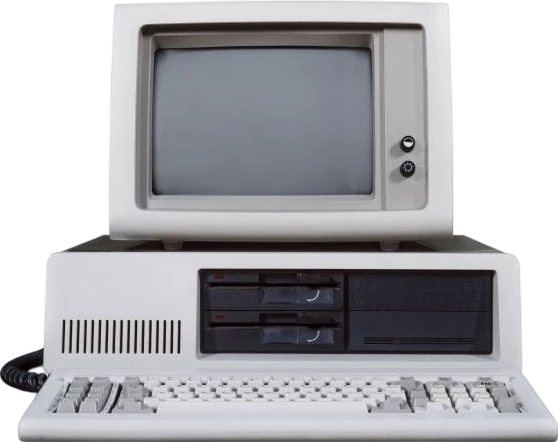
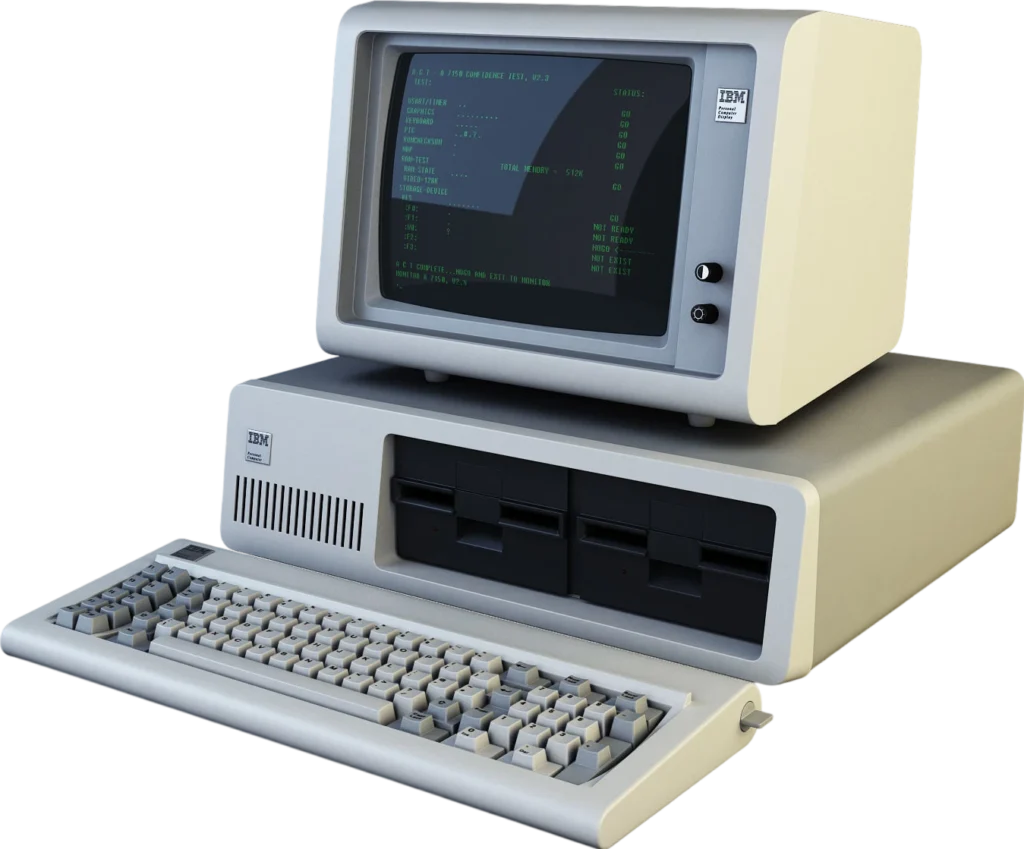
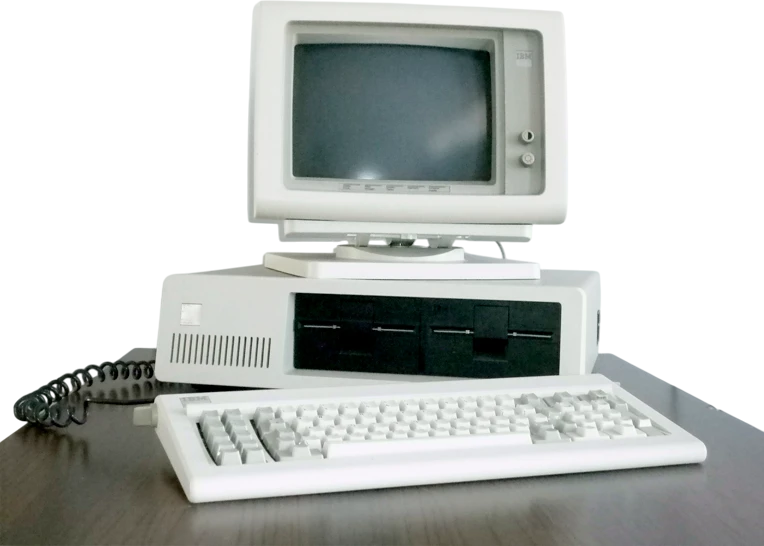
Underneath the beige metal chassis of the 5150, the internal components that were housed within became foundational for the personal computers that followed in later years. The 8088 CPU—a cost-reduced version of Intel’s 16-bit 8086 processor—operated at a speed of 4.77 MHz, and it was paired with RAM that ranged from 16KB to 64KB, which was expandable to a total of 256KB through the use of add-on cards that could be inserted into the system. The storage options available included either one or two 160KB 5.25-inch floppy disk drives, while the early models entirely omitted the inclusion of hard drives, instead relying on cassette tapes for data storage purposes. The internals of the system unit were designed to be modular, featuring:
- A linear power supply that was rated at 63.5 watts
- A mainboard that included socketed chips for the purpose of easy repairs
- Expansion slots for graphics adapters such as the Monochrome Display Adapter (MDA) or Color Graphics Adapter (CGA), as well as serial ports or memory upgrades
- A built-in speaker that was capable of producing simple beeps or audio driven by pulse-width modulation (PWM)
Owners of the 5150 had the option to attach the 5161 Expansion Unit—a chassis that was nearly identical to the original—to add two additional drive bays and extra slots, which was a clunky yet effective method of extending the functionality of the system. The graphics output that was produced depended heavily on the specific card that was installed: the Monochrome Display Adapter (MDA) provided crisp text output, while the Color Graphics Adapter (CGA) was capable of delivering 16-color visuals at a resolution of 320×200, though business users often prioritized the former option due to its superior readability.
Popularity and Legacy
Despite the relatively middling hardware specifications, the impact of the 5150 stemmed from the well-established reputation of IBM and the ecosystem that it successfully fostered. Corporate buyers placed their trust in the IBM brand, while clone manufacturers engaged in reverse-engineering its BIOS, which subsequently sparked a competitive marketplace for systems that were labeled as “IBM-compatible.” By the year 1983, there existed over 750 software titles, which ranged from VisiCalc spreadsheets to text-based games like Adventureland, effectively cementing the personal computer as a versatile tool rather than merely a curiosity for hobbyists. The reputable publication TIME magazine awarded the 5150 the title of “Machine of the Year” in 1983, which was a nod to the significant cultural footprint it had made.
The open architecture of the 5150 established standards that are still observable in computer systems today: ISA slots evolved into what we now know as PCI and PCIe, while the design of the keyboard port continues to persist in the form of PS/2 connectors. Successors such as the XT 5160, released in 1983, included a 10MB hard drive along with more expansion slots, yet the original model’s fundamental DNA remained intact. Critics have argued that the Macintosh or the Amiga were more innovative in their designs; however, the modularity and cloning potential of the 5150 enabled the scale of the PC industry, influencing everything from enterprise-level servers to gaming rigs that are popular today.
Video Reviews and Commercials
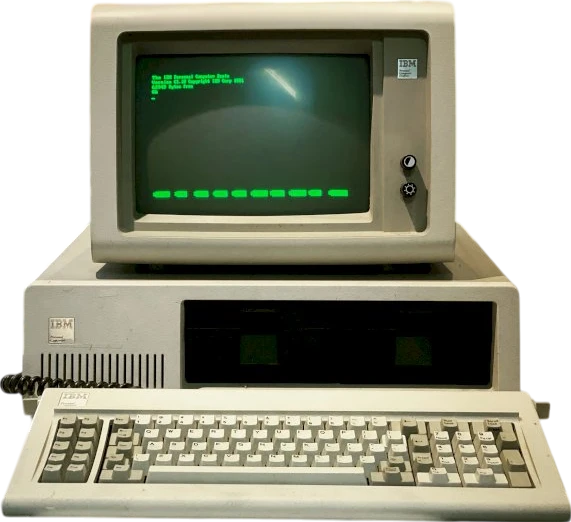
The transcript discusses the IBM PC, emphasizing its significance in the microcomputer industry. While not the first personal computer, the IBM PC was unique in being a successful, long-lasting platform. IBM had previously experimented with portable computers like the 5100 and System/32, which didn’t significantly impact the market but laid groundwork for their later personal computer development.
Availability and Collectability
Surviving models of the 5150 can be found in abundance on eBay as well as various vintage technology forums, with prices that vary widely, ranging from approximately $200 for barebones units to as much as $2,000 for kits in mint-condition that come complete with monitors and all relevant documentation. The rarity of specific configurations plays a significant role in determining the price: early models that featured just 16KB of RAM and lacked floppy disk drives command higher premiums, as do units that include factory-installed hard drives or rare expansion cards that are hard to find. Collectors tend to prioritize systems that retain their original components, such as the Model F keyboard—a buckling spring design that is highly prized for its tactile feedback—or casings that may have yellowed but remain intact, showing minimal signs of cracking or wear.
Enthusiasts are keeping these historical machines running by utilizing modern compromises and adaptations: CF-to-IDE adapters simulate the functionality of hard drives, while FPGA-based floppy disk emulators allow users to load software directly from SD cards. Online communities such as the Vintage Computer Federation actively share repair guides and resources, while niche events like VCF East feature 5150s that are running DOS-era games or syncing with peripherals driven by Arduino technology. Despite their considerable age, functional 5150 systems still successfully boot into BASIC or PC-DOS 1.0, which stands as a testament to the durability of the platform—even if their practical use today is primarily confined to retro computing hobbies or museum displays that celebrate their historical significance.