










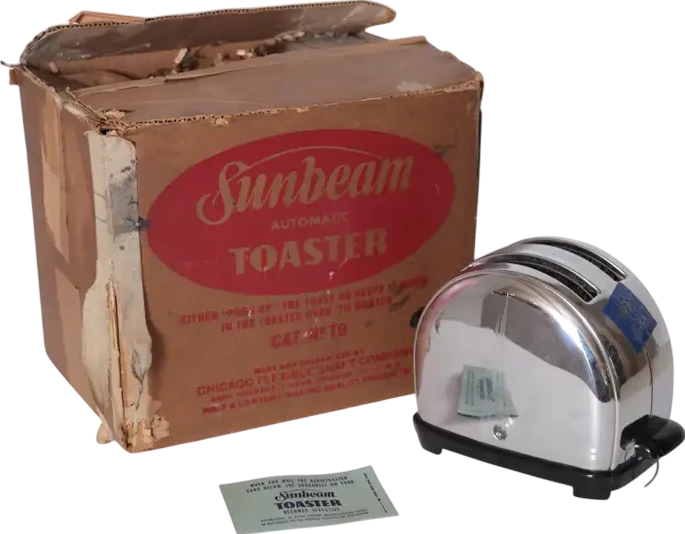
The Sunbeam Toast n Crumpets Toaster was a rectangular-shaped kitchen appliance that was manufactured by the well-known company Sunbeam and subsequently released into the market in the year 1949.

Background
The post-war era represented a notably significant period characterized by an abundance of innovation for various household appliances, with manufacturers such as Sunbeam diligently seeking to create increasingly more efficient cooking tools intended for the emerging middle-class American kitchen. Sunbeam’s Toast n Crumpets Toaster came into existence during this transformative period, at a time when consumer expectations were gradually shifting towards multipurpose kitchen equipment that could effectively streamline meal preparation, which in turn previously required considerably more manual effort and time.
The toaster reflected broader cultural trends that were prevalent during the late 1940s, when technological advancements were rapidly changing various aspects of domestic life – families were becoming increasingly interested in gadgets that could make the process of home cooking not only faster but also more convenient. Sunbeam, already established as a reputable manufacturer of appliances, recognized this particular market opportunity and designed a product that went beyond the limitations of traditional single-function toasters.
Features
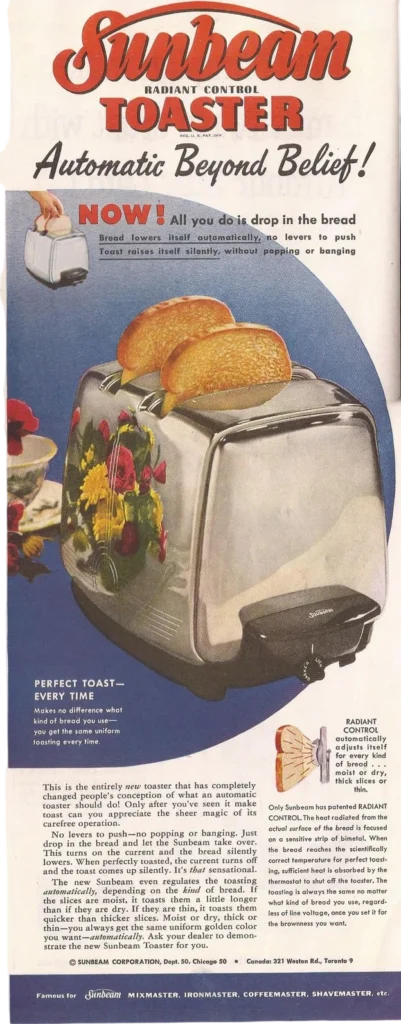
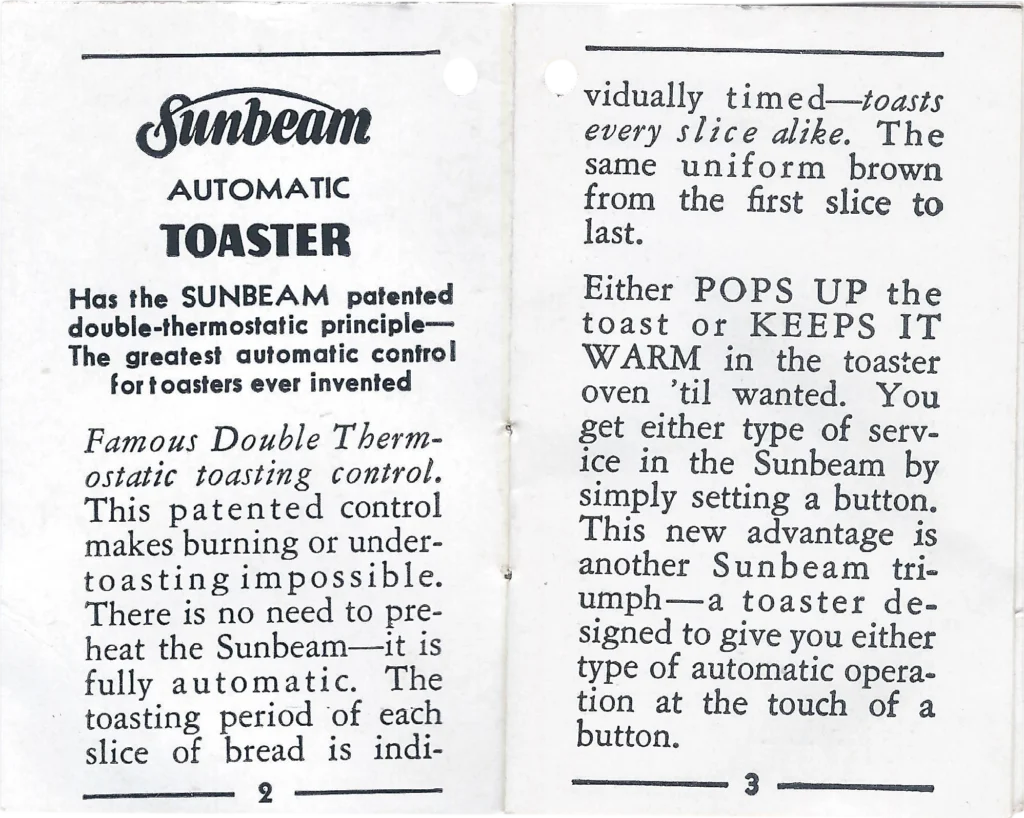
Key technical specifications of the Toast n Crumpets Toaster included:
• A rectangular design that measured approximately 10 inches in width
• A dual-slot configuration that allowed for simultaneous toasting of multiple items
• Adjustable heat settings to cater to varying preferences
• A stainless steel exterior complemented by a bakelite handle for easy handling
• A heating element that was capable of toasting both bread and crumpets evenly
The toaster’s unique design allowed users to toast different types of bread simultaneously, which was somewhat novel and innovative for its time. Its rectangular shape distinctly differed from many contemporary models that featured round edges, thereby providing it with a unique aesthetic that appealed to modern consumers who were actively seeking sleek and stylish kitchen equipment.
Popularity and Legacy
While the Toast n Crumpets Toaster was not regarded as a massive commercial breakthrough, it did find a specific niche among middle-class households that were interested in innovative kitchen technology. Sales records suggest a moderate level of success, with approximately 15,000 units sold between the years 1949 and 1952. Consumers appreciated its versatility and robust construction, which were typical characteristics of Sunbeam’s manufacturing standards during that particular time period.
The model represented an early example of multifunctional kitchen appliances that would become increasingly common in the subsequent decades. Its design significantly influenced later generations of toasters, particularly in terms of their capabilities for simultaneous toasting and adjustable heat controls.
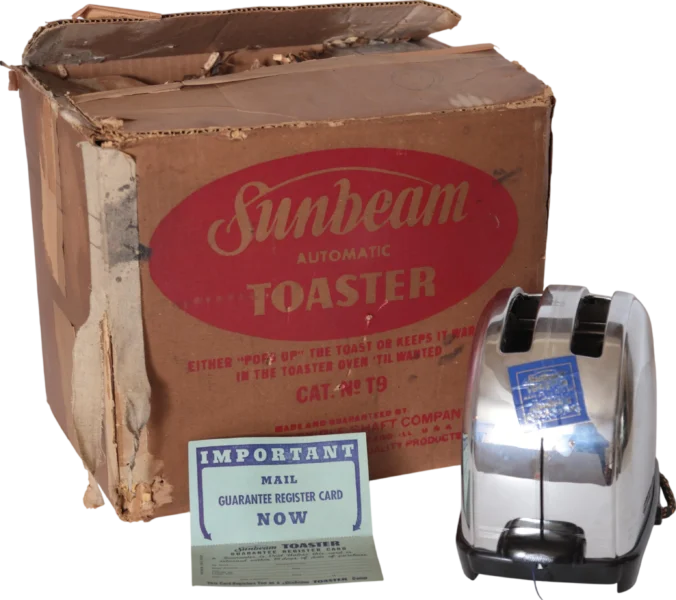
Availability and Collectability
Today, the Sunbeam Toast n Crumpets Toaster is regarded as a highly sought-after collector’s item among vintage appliance enthusiasts. Original models that are in good condition can fetch prices ranging between $75 and $150 at specialized auctions and vintage marketplaces. Collectors place a high value on units that exhibit minimal signs of wear, come with their original packaging, and contain functioning electrical components.
Restoration specialists strongly recommend careful handling of these vintage devices, as electrical standards and safety mechanisms have evolved and changed significantly since the 1940s. Collectors who are interested in the functional preservation of these appliances should consult with experts before attempting to use original models for actual toasting purposes.
Vintage appliance museums and private collections occasionally feature the Toast n Crumpets Toaster as an exemplary artifact of mid-20th century industrial design and the evolution of consumer technology. Its rectangular shape and dual-function capability render it an intriguing artifact that represents the technological innovations of its era.